Surah Rahman: Read Online, Download PDF, Listen to Audio and Understand Its Meaning
On this page you can read Surah Rahman, download the PDF, listen to its audio recitation, and understand what it means, verse by verse and section by section.
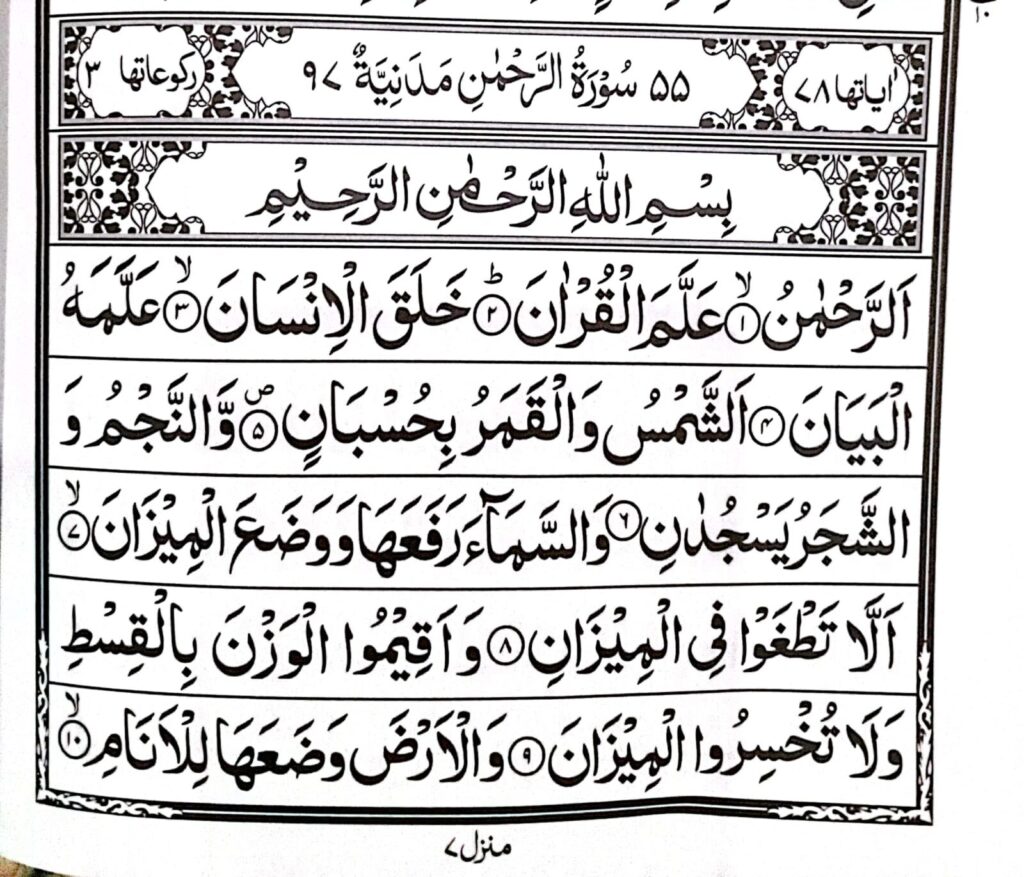
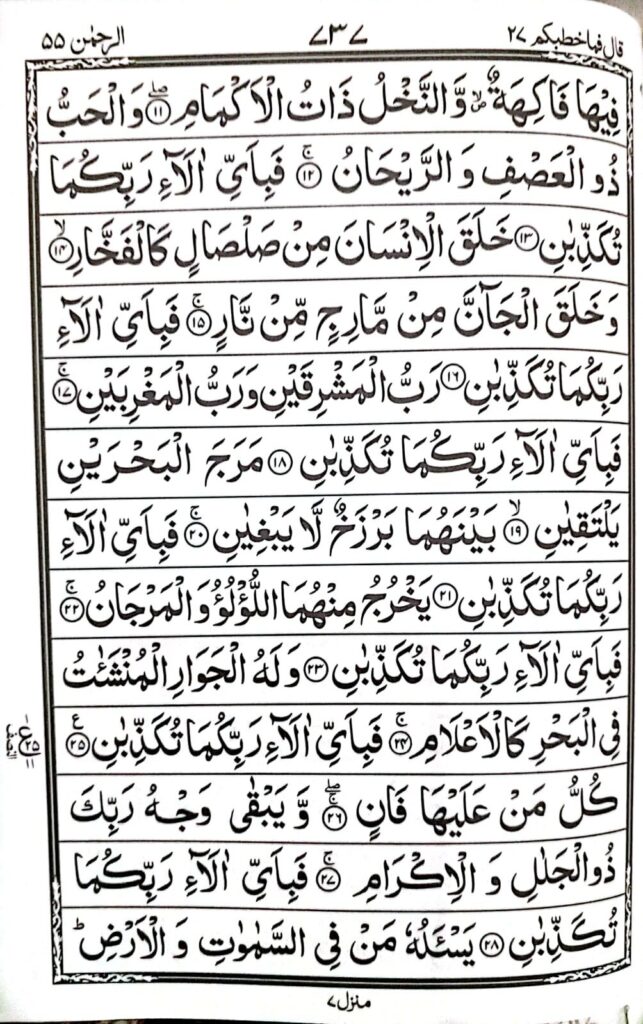
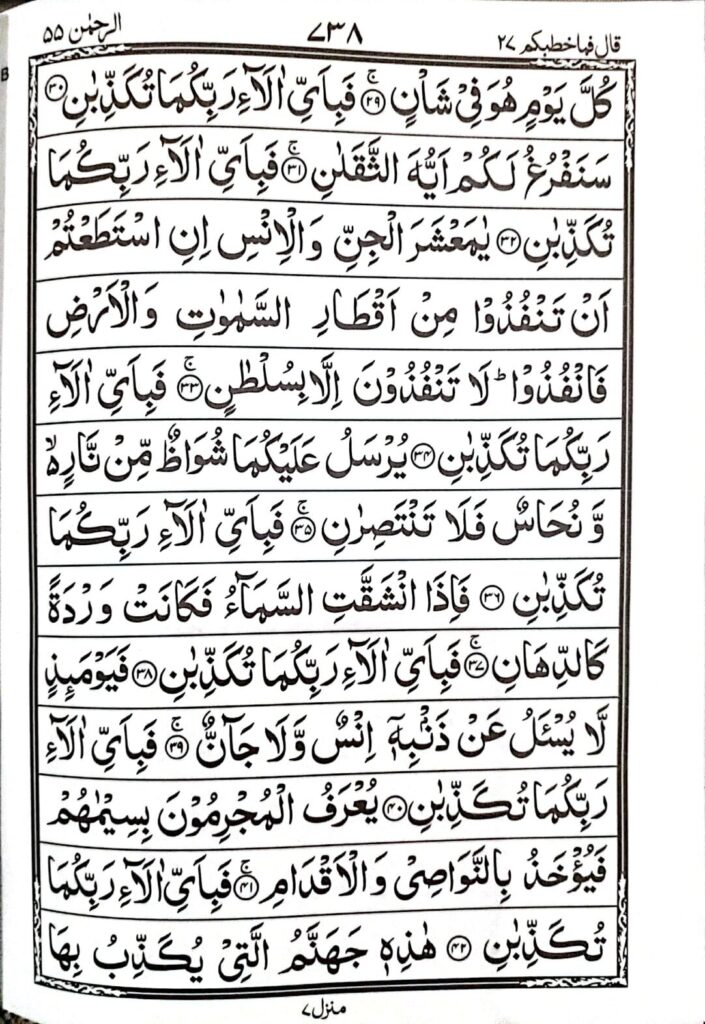
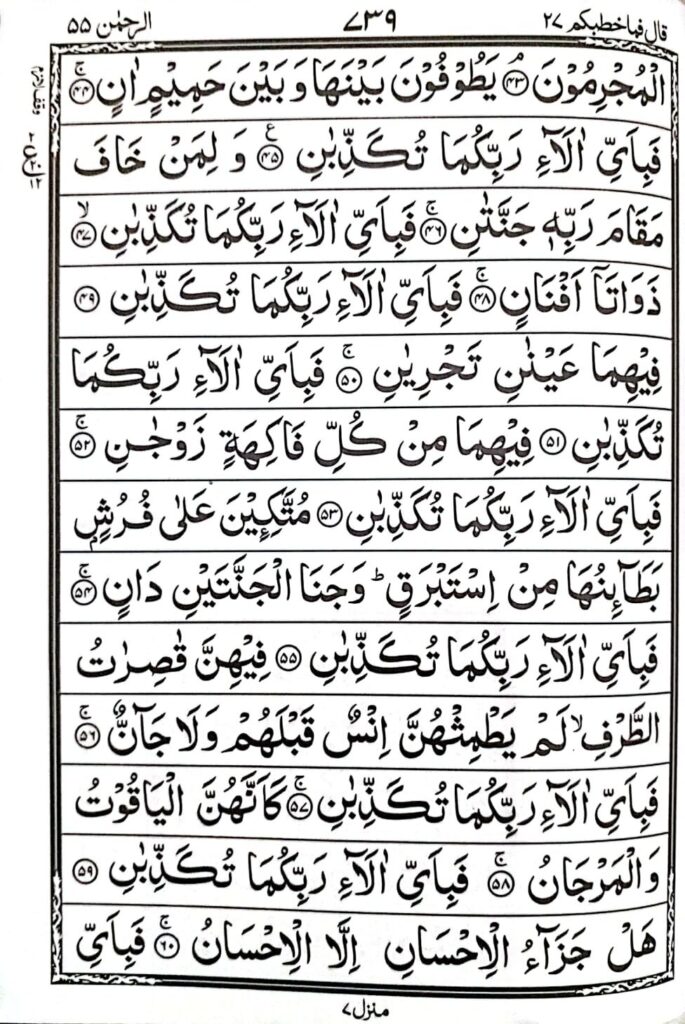
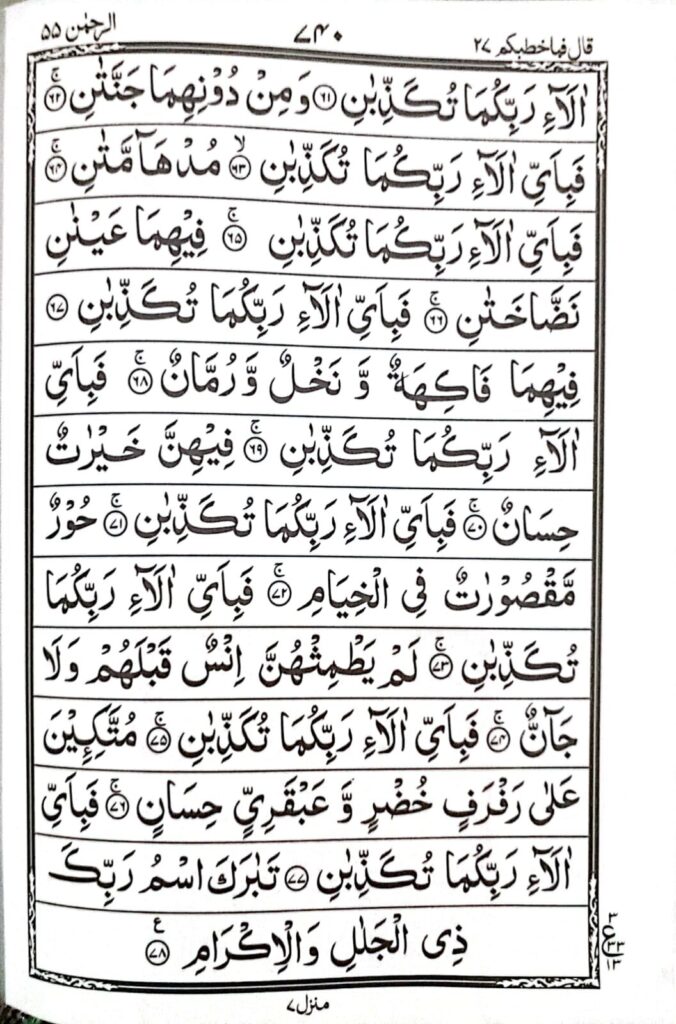
Surah Rahman is one of the most loved chapters of the Holy Quran. It is the 55th surah, made up of 78 verses, and it sits in Para (Juz) 27. Muslims around the world, whether they read it in Arabic, follow it in English, Urdu, Hindi or Bangla, or simply listen to its recitation, are drawn to its rhythm and its message. This surah speaks directly to the heart. It reminds every human being and every jinn of the countless blessings Allah has given them, and it asks, again and again, “Then which of your Lord’s blessings will you both deny?”
Surah Rahman Quick Facts
| Detail | Information |
|---|---|
| Surah number | 55 |
| Number of verses (ayat) | 78 |
| Number of Rukus | 3 |
| Juz / Para | 27 |
| Hizb | 54 |
| Number of words | 352 |
| Number of letters | 1,585 |
| Meaning | The Beneficent / The Most Gracious / The Most Merciful |
| Place of revelation | Mostly considered Makkah (see below) |
Read Surah Rahman in Arabic
Surah Rahman opens, like every surah except Surah At-Tawbah, with the Bismillah, “In the name of Allah, the Entirely Merciful, the Especially Merciful.” The surah itself then begins:
بِسْمِ اللَّهِ الرَّحْمَـٰنِ الرَّحِيمِ الرَّحْمَـٰنُ (1) عَلَّمَ الْقُرْآنَ (2) خَلَقَ الْإِنسَانَ (3) عَلَّمَهُ الْبَيَانَ (4)
In English, these opening verses mean:
- The Most Merciful
- Taught the Quran
- Created man
- Taught him speech (the ability to express himself clearly)
Notice how the surah begins. Before mentioning anything else Allah has created, it starts with mercy itself, then the Quran, then the human being, then the gift of speech. Scholars often point out that this order is deliberate: knowledge of the Quran is placed before the creation of man, because it is through the Quran that human life finds its purpose.
You can read the complete 78 verses of Surah Rahman on this page in Arabic, along with transliteration and translation, so that whether you read Arabic fluently or you are still learning, you can follow along and understand every word.
What Does Surah Rahman Mean?
The word “Ar-Rahman” is one of the names of Allah, and it means “The Most Merciful” or “The Most Gracious.” It refers to the mercy Allah shows to all of His creation, believers and non-believers alike, in this worldly life. The surah is named after this word because it appears in the very first verse, and because the entire surah, from beginning to end, is a list of the mercy and favours Allah has given to humans and jinn.
Is Surah Rahman Makki or Madani?
Most scholars classify Surah Rahman as a Makki surah, meaning it was revealed in Makkah before the migration to Madinah. This is the majority view, and it is supported by the style of the surah itself. Its short, rhythmic verses, its focus on the signs of Allah in nature, and its direct, repeated challenge to disbelievers are typical features of the earliest Makkan revelations.
At the same time, some traditions reported from companions such as Abdullah ibn Abbas, Ikrimah and Qatadah suggest parts of it were revealed in Madinah. However, other reports from these same narrators contradict this, and the content of the surah is generally considered closer to the early Makkan chapters. So while you may come across both views, the stronger and more widely held opinion is that Surah Rahman is Makki.
The Main Themes of Surah Rahman
Surah Rahman can be understood in a few connected parts:
- Verses 1 to 25: Allah lists His blessings one after another. He taught the Quran, created man and taught him speech, set the sun and moon on a precise course, made the stars and trees prostrate to Him, raised the sky and set the balance so that people deal justly, spread out the earth with its fruit, grain and fragrant plants, created man from clay and the jinn from smokeless fire, and made the two seas meet without mixing, giving rise to pearls and coral.
- Verses 26 to 28: A turning point. Allah reminds us that everyone on earth will perish, and only His Face, full of majesty and honour, will remain forever.
- Verses 29 to 45: Both jinn and humankind are addressed directly and warned that they will be held accountable for their deeds. They are told they cannot escape Allah’s reach, and the surah then describes the punishment awaiting those who denied the truth.
- Verses 46 to 77: A detailed and beautiful description of Paradise, given in two levels. The first two gardens (for those who feared standing before their Lord) have flowing springs, fruit of every kind, and companions of modesty and beauty. Two further gardens are described after that, deep green, with gushing springs, dates and pomegranates.
- Verse 78: The surah closes as it began, praising the blessed name of Allah, “Owner of Majesty and Honour.”
The Repeated Verse: “Then Which of Your Lord’s Blessings Will You Both Deny?”
One verse of Surah Rahman is repeated more than any other verse in the entire Quran. In Arabic it reads:
فَبِأَيِّ آلَاءِ رَبِّكُمَا تُكَذِّبَانِ “Fabi ayyi ala’i rabbikuma tukazzibaan” “Then which of your Lord’s blessings will you both deny?”
This verse appears 31 times throughout the surah. The word “both” refers to humankind and the jinn, since Surah Rahman is one of the few places in the Quran where Allah addresses both creations together, back to back. The refrain is placed after almost every blessing that is mentioned, whether it is the creation of the heavens, the balance of justice, the fruit of the earth, or even the description of Hell and Paradise. Each time, it works like a gentle but firm question: with everything you have been given, how can you deny even one of these favours?
There is a well known narration that when the Prophet Muhammad (peace be upon him) recited Surah Rahman to his companions, they remained silent. He then told them that he had recited the same surah to a gathering of jinn, and that every time he reached this verse, they would respond, “We do not deny any of our Lord’s blessings, our Lord, and to You is all praise.” This narration is reported through Abdullah ibn Umar and Jabir ibn Abdullah, and was recorded by At-Tirmidhi, who noted it as gharib (a hadith with a single main narrator), and by Al-Bazzar.
The Two Seas and the Barrier Between Them
Among the signs mentioned in Surah Rahman are the two seas that meet yet do not mix:
مَرَجَ الْبَحْرَيْنِ يَلْتَقِيَانِ (19) بَيْنَهُمَا بَرْزَخٌ لَّا يَبْغِيَانِ (20) “He released the two seas, meeting side by side. Between them is a barrier, so neither of them transgresses.” (55:19 to 20)
Classical commentators explain that this barzakh, or barrier, keeps sweet and salt water from overrunning one another where rivers meet the ocean. From these waters, Allah brings out pearls and coral (verse 22), and He describes the ships that sail upon the sea “like mountains” (verses 24), a reminder of both the beauty of creation and the usefulness Allah has placed within it for human life.
“Lord of the Two Easts and the Two Wests”
رَبُّ الْمَشْرِقَيْنِ وَرَبُّ الْمَغْرِبَيْنِ “Lord of the two easts and Lord of the two wests” (55:17)
This verse refers to the changing points on the horizon where the sun rises and sets across the seasons, reaching its furthest point in summer and its furthest point in winter. By describing Himself as Lord of both extremes, Allah reminds us that He governs every direction and every season, and that this precise, repeating pattern in nature is itself one of His countless favours.
The Shortest Verse in the Quran
Verse 64 of Surah Rahman holds a small but notable distinction. It reads simply:
مُدْهَامَّتَانِ “Mudhaammataan” “Both dark green [with foliage].” (55:64)
This single word describes the two additional gardens of Paradise mentioned in the surah, lush and deep green from constant watering. It is recognised as the shortest verse in the entire Quran.
“Is the Reward for Good Anything but Good?”
هَلْ جَزَاءُ الْإِحْسَانِ إِلَّا الْإِحْسَانُ “Is the reward for good [anything] but good?” (55:60)
This verse is often highlighted for the simple but powerful principle it teaches. Whoever does good, whoever lives with excellence and sincerity, will be met with good in return from Allah. It is a verse of hope that sits between the surah’s warning about the Day of Judgment and its description of the reward that awaits the righteous.
Why Is Surah Rahman Often Called the “Beauty” or “Ornament” of the Quran?
You will often come across a saying, popularly attributed to the Prophet Muhammad (peace be upon him), that “everything has an ornament, and the ornament of the Quran is Surah Ar-Rahman.” This narration is recorded through Ibn Mas’ud in collections such as Imam Al-Bayhaqi’s Shu’ab al-Iman, and it is the reason many people refer to Surah Rahman as the beauty or ornament of the Quran.
It is worth knowing, however, that hadith scholars have raised concerns about the strength of this narration, and its chain has been discussed and questioned by later scholars of hadith. The same caution applies to another popular title for this surah, “the Bride of the Quran,” which some hadith researchers have graded as an unreliable (munkar) narration. This does not take away from the surah’s genuine and widely recognised beauty, its rhythm, and its impact on the hearts of those who recite and hear it. It simply means these particular titles are best understood as popular expressions of that beauty rather than as confirmed sayings of the Prophet.
Benefits of Reciting Surah Rahman
Surah Rahman is recited widely across the Muslim world, and many people describe real spiritual benefit from it, including:
- A sense of calm and inner peace, especially when recited slowly and with reflection on its meaning.
- A renewed feeling of gratitude, since the surah is essentially a list of Allah’s blessings, which naturally turns the heart toward thankfulness.
- Strengthening one’s connection with Allah’s mercy, since the surah opens with His name Ar-Rahman.
- A reminder of accountability and the reality of the Hereafter, which encourages righteous living.
Some people also recite Surah Rahman after Fajr prayer, before sleeping, or on Fridays, as part of their regular routine of worship. This is a matter of personal practice rather than a specific obligation, and reciting it at any time carries its own reward. As with all matters of virtue tied to popular practice, it is best to hold on firmly to what is authentically established, gratitude, reflection, and sincere recitation, and to treat claims of guaranteed outcomes (such as specific cures or worldly results from reciting a set number of times) with caution, since these are not supported by authentic, established hadith.
How to Memorise Surah Rahman
Because of its repeated refrain and flowing rhythm, many people find Surah Rahman easier to memorise than its length might suggest. A few practical tips:
- Break the surah into small sections and memorise three to four verses at a time.
- Use the repeated verse, “Then which of your Lord’s blessings will you both deny,” as a natural marker between sections.
- Listen to a trusted reciter regularly while following the Arabic text, so your ear becomes familiar with the sound before you try to recall it from memory.
- Revise what you have memorised at a fixed time each day, such as after Fajr or before sleeping, so it stays fresh.
- Recite what you know in your daily prayers whenever possible. Repetition in prayer is one of the most effective ways to keep verses firmly in memory.
Frequently Asked Questions About Surah Rahman
Which Para (Juz) is Surah Rahman in?
Surah Rahman is located in Para (Juz) 27 of the Quran.
How many verses (ayat) does Surah Rahman have?
Surah Rahman has 78 verses.
How many Rukus are in Surah Rahman?
Surah Rahman has 3 Rukus.
What number surah is Rahman in the Quran?
Surah Rahman is the 55th surah of the Quran.
Is Surah Rahman Makki or Madani?
The majority of scholars consider it a Makki surah, though a few traditions mention parts revealed in Madinah.
What does Surah Rahman mean?
It means “The Most Merciful” or “The Beneficent,” referring to one of Allah’s names.
Which verse is repeated in Surah Rahman, and how many times?
The verse “Then which of your Lord’s blessings will you both deny?” is repeated 31 times.
What is the shortest verse in the Quran, and is it in Surah Rahman?
Yes. Verse 64 of Surah Rahman, “Mudhaammataan” (both dark green), is recognised as the shortest verse in the Quran.
Why does Surah Rahman address both humans and jinn together?
Surah Rahman is one of the clearest places in the Quran where Allah speaks to humankind and the jinn as two responsible creations together, since both were given the ability to choose, to believe or to deny, and both will be held accountable on the Day of Judgment.
What are the two seas mentioned in Surah Rahman?
Verses 19 and 20 describe two bodies of water that meet but are kept apart by a barrier so that neither overwhelms the other, understood by commentators as sweet and salt water, or the meeting of sea and land.
Listen to Surah Rahman and Download the PDF
You can listen to the full recitation of Surah Rahman on this page, and download the Arabic text as a PDF to read offline or share with family and friends. Whether you are reading it for the first time or returning to it as part of your daily recitation, Surah Rahman remains one of the most comforting and reflective chapters of the Quran, a chapter that asks nothing more of us than to recognise, and be grateful for, everything we have already been given.